Lucky Bay Camping Guide (Cape Le Grand, Esperance)
What Lucky Bay campground costs, how the 180 day booking window works, what the 56 sites are actually like, and the rules for driving on the beach.

Dorian Menard
Founder & Owner
Lucky Bay is the campground people drive 720 kilometres to reach, and the one they most often turn up to unprepared.
The short version: 56 unpowered sites, $20 per adult per night on top of a $17 park entry fee, bookings open 180 days ahead, and no drinking water on site. You cannot pick your own site, you take what is free when you arrive. Beach driving is allowed, with conditions.
Here is everything worth knowing before you book.
What It Costs
Two separate charges catch people out. The camping fee is per person per night, and the park entry fee is per vehicle, charged on top.
| Charge | Rate |
|---|---|
| Camping, adult | $20.00 per night ($15.00 concession) |
| Camping, child | $5.00 per night |
| Park entry, standard vehicle | $17.00 per vehicle (12 or fewer occupants) |
Figures are from the Department of Biodiversity, Conservation and Attractions and the Cape Le Grand National Park park page. Check both before you travel, because fees are reviewed periodically.
For two adults over four nights, that is $160 in camping plus the entry fee. If you are visiting several parks on the same trip, a DBCA holiday park pass usually works out cheaper than paying entry at each gate.
Booking: 180 Days, and You Still Don’t Choose Your Site
Bookings are essential and open up to 180 days before arrival, which is roughly six months. For summer and the April and October school holidays, that window matters. Popular dates go quickly once released.
The part almost nobody expects: you cannot reserve a specific site. You book a place in the campground, then choose from whatever is unoccupied when you arrive. Two consequences worth planning around:
- Arriving mid afternoon on a changeover day leaves you the sites nobody else wanted, usually the ones furthest from the beach or most exposed to wind.
- Travelling as a group of two vehicles does not guarantee you sites next to each other. Arrive together if that matters to you.
The Sites Themselves
There are 56 compacted crushed rock, reverse-in sites. That surface is worth picturing properly, because it changes what you can do:
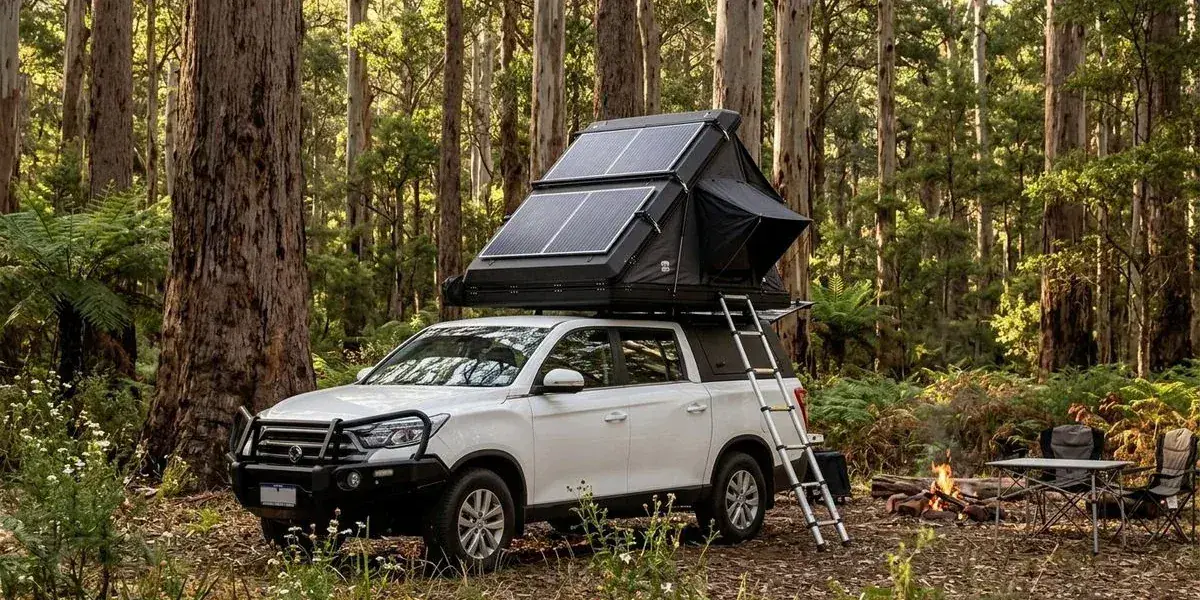
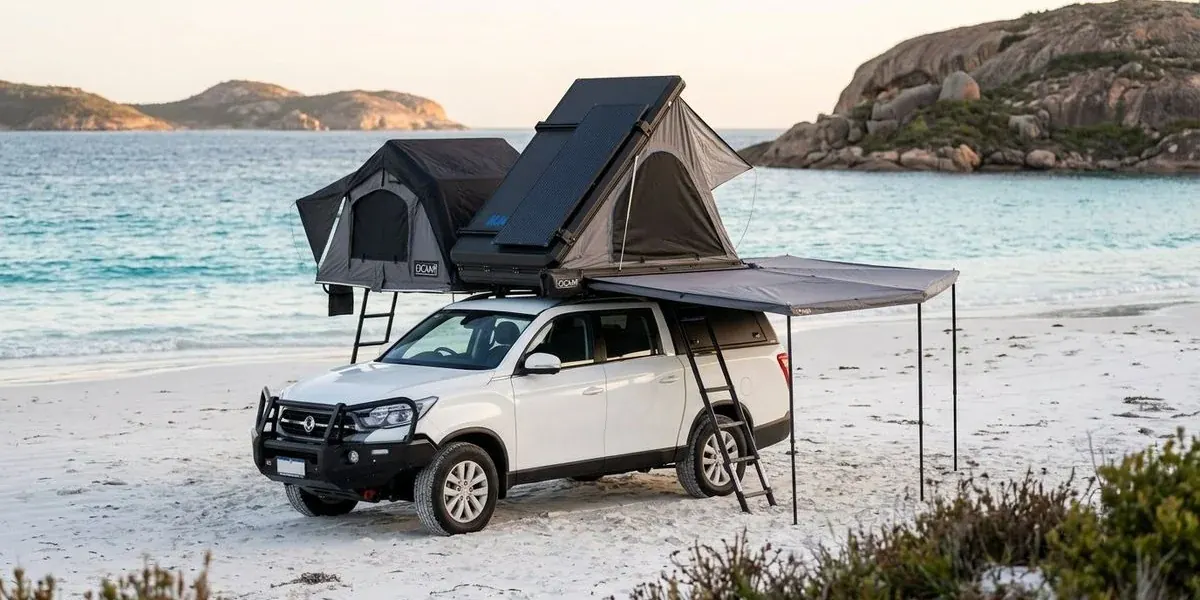
- Pegs do not go in easily. A ground tent is hard work here. A rooftop tent sidesteps the problem entirely, which is one reason we point Esperance-bound renters at the rooftop setups.
- Reverse-in means reversing. If you have never backed a vehicle into a bay, practise before you are doing it in front of a full campground at dusk.
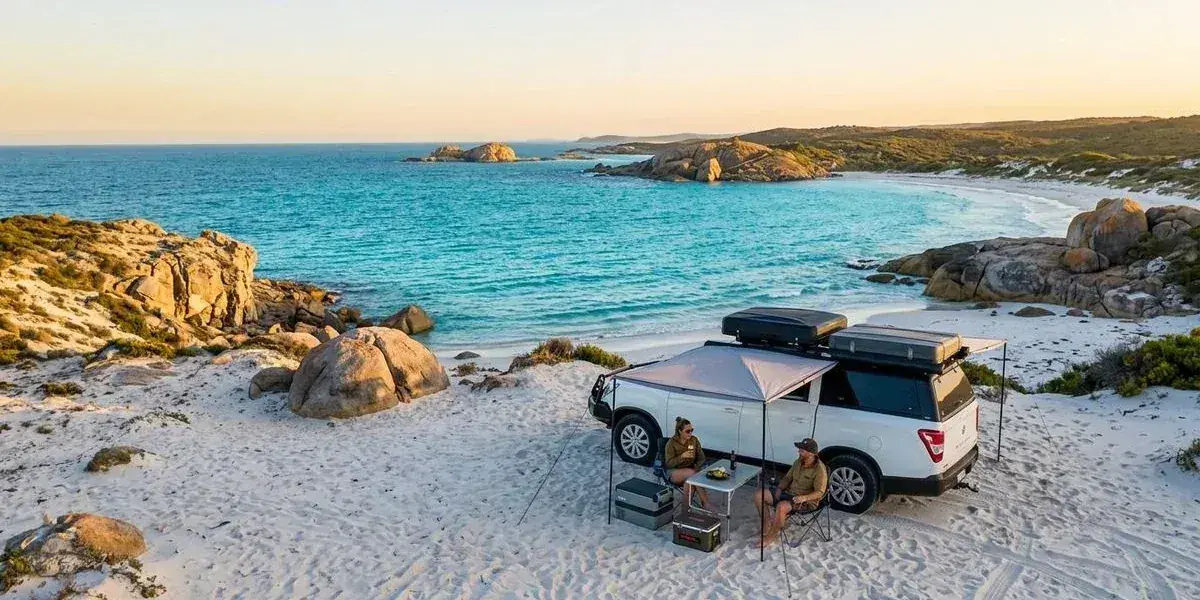
- Every site is unpowered. You are running off your own battery system for the whole stay.
Generators are permitted, but only between 8am and 1pm and 5pm to 9pm. If your power plan depends on a generator, that is a narrow window. A dual battery setup with solar removes the issue, and it is why every vehicle in our fleet runs one as standard.
Facilities, and the One Thing People Forget
The campground has flush toilets and no-flush pit toilets, showers where hot water is not guaranteed, food preparation shelters with gas barbecues, and an unsheltered gas barbecue.
What it does not have is drinking water. That single fact undoes more trips here than anything else on this page. You carry every litre you intend to drink, cook with and wash up with.
Plan on five to six litres per person per day once you account for cooking and dishes. For two people over four nights that is around 45 litres, which is more than a lot of vehicles carry as standard. Our campers run integrated water tanks from 20L up to 100L on the Wanderer 2.0, so check what your vehicle actually holds before you leave Esperance, and top up in town rather than hoping.
Driving on Lucky Bay Beach
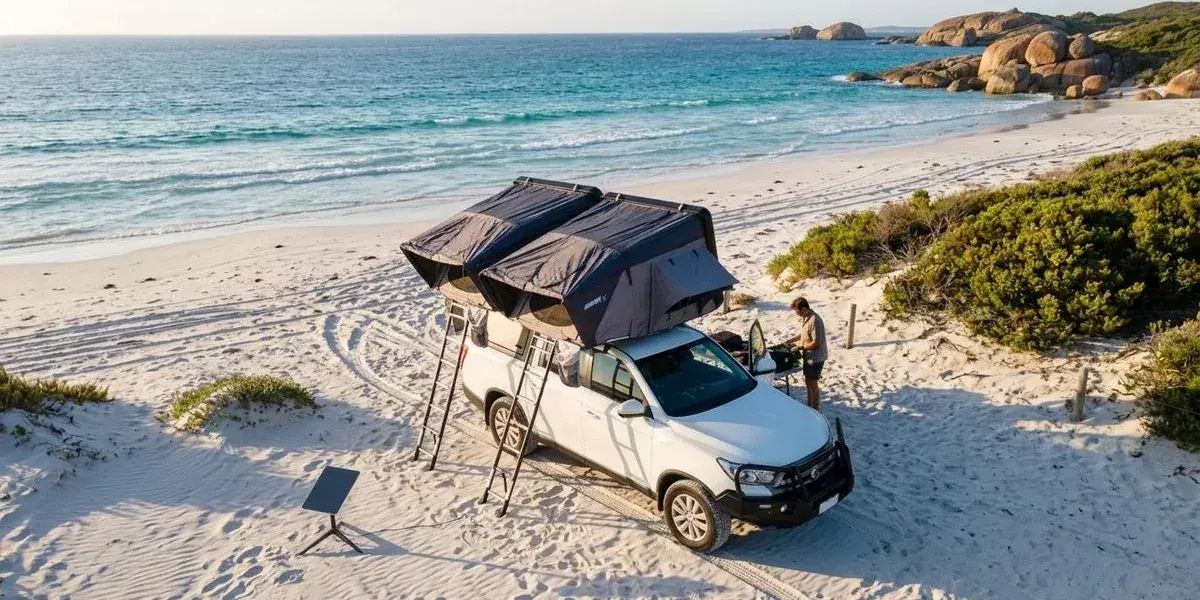
This is the part people come for, and it is genuinely allowed. Lucky Bay is one of the few WA beaches where we permit our vehicles on the sand at all.
DBCA’s guidance is direct: drive slowly, watch for pedestrians and wildlife, and normal road rules apply. Their own warning is worth quoting the substance of, because it is not decoration. These beaches are treacherous for vehicles, and it is easy to bog in sand that looks completely innocent, wet or dry. Ask the ranger about surface conditions and tides before you drive on. Full detail is on the Lucky Bay beach page.
What keeps people out of trouble in practice:
- Drop tyre pressure to around 18 PSI before you go on, not after you are stuck.
- Stay on the firm sand near the waterline and below the high-tide mark. Above it the sand is soft and unforgiving.
- Go on a falling tide, not a rising one.
- Carry recovery boards and a compressor. Every one of our vehicles has both, and on this beach they are not optional extras.
One thing to be clear about, because it gets assumed: Lucky Bay and Wharton Beach are the only beaches our hire terms allow sand driving on. Sand tracks elsewhere are not covered.
Getting There
The park sits 56 kilometres east of Esperance on a sealed road, with the final run in on well-maintained gravel. DBCA describes the park as around 30 minutes from town. Lucky Bay Road itself is sealed, and the parking area by the picnic ground is sealed too, so you are not committing to anything rough just to reach the campground.
From Perth it is about 720 kilometres, which is a full day of driving and better split across two. If you are building the whole trip rather than just the campground stop, our Perth to Esperance road trip guide maps the route and the stops worth making on the way.
When to Go
Esperance runs opposite to the north. The reliable beach weather is October to April, and February and March usually deliver the clearest water. Winter is cold and blustery, and the trade-off is a near-empty park.
Wind is the variable people underestimate. A calm forecast can turn inside an hour on this coast, so pick a site with some shelter if the forecast looks marginal, and pack a windproof layer even in summer.
What This Costs Against the Alternative
Four nights at Lucky Bay for two adults is $160 plus entry. The same four nights in an Esperance caravan park runs considerably more, and puts you 56 kilometres from the beach you came to see.
That gap is the argument for a self-sufficient setup. Carry your own water and power and the cheap sites open up, including the genuinely free ones. If that is the way you want to travel, our guide to the best free camps in Western Australia covers the ones worth the detour.
Lucky Bay rewards a bit of planning: book the day the 180 day window opens, fill your water tanks in Esperance, and check the tide before you put a wheel on the sand. Get those three right and the rest of it takes care of itself.
If you want a vehicle that arrives already sorted for it, water on board, dual batteries, recovery boards and a rooftop tent that does not need pegs, that is exactly what our 4WD camper hire in Perth is set up for.
Ready to Start Your Adventure?
Premium 4WD campers from $160/day. Depot pickup in Cloverdale, 5 minutes from Perth Airport.
Check Availability