What to Look for When Hiring a 4WD Camper in Perth
Eight checks before you hire a 4WD camper in Perth: the vehicle, inclusions, kilometres, excess, road rules, fuel, cancellation terms and support.

Dorian Menard
Founder & Owner
Before you pay for a 4WD camper hire in Perth, check eight things: the vehicle, what is included, how kilometres are counted, what your excess covers and excludes, where you can drive, the fuel and cleaning rules, the cancellation terms, and who you call when something breaks. Any operator should answer all eight in writing.
Each section below says what to ask and how we answer it, using the rules on our Camplify listing and in our FAQ, so you can hold any operator to the same list. If you want the money side first, start with how much 4WD camper hire costs in Perth.
1. The Vehicle: Model Year, Service History and Tyres
Ask for the model year, the odometer reading and the service history, and ask who services the vehicle. A clear answer is a good sign. A vague one is a reason to look elsewhere.
A Camplify listing shows photos, specifications and reviews. Read the recent reviews on any listing you are considering, and look for comments on handover, cleanliness and how problems were handled.
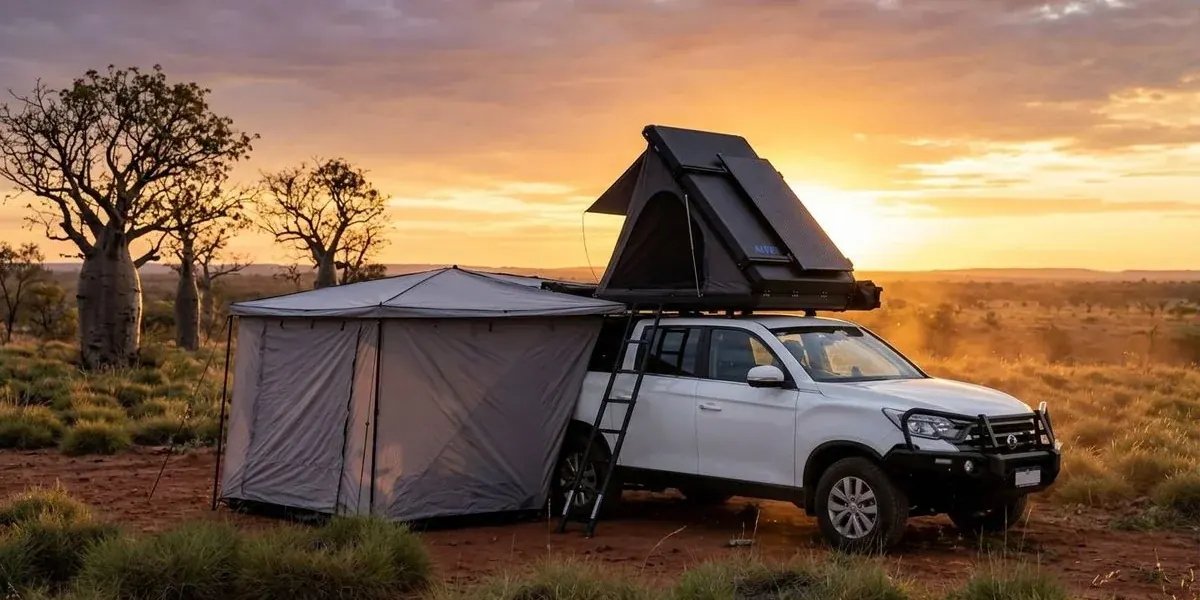
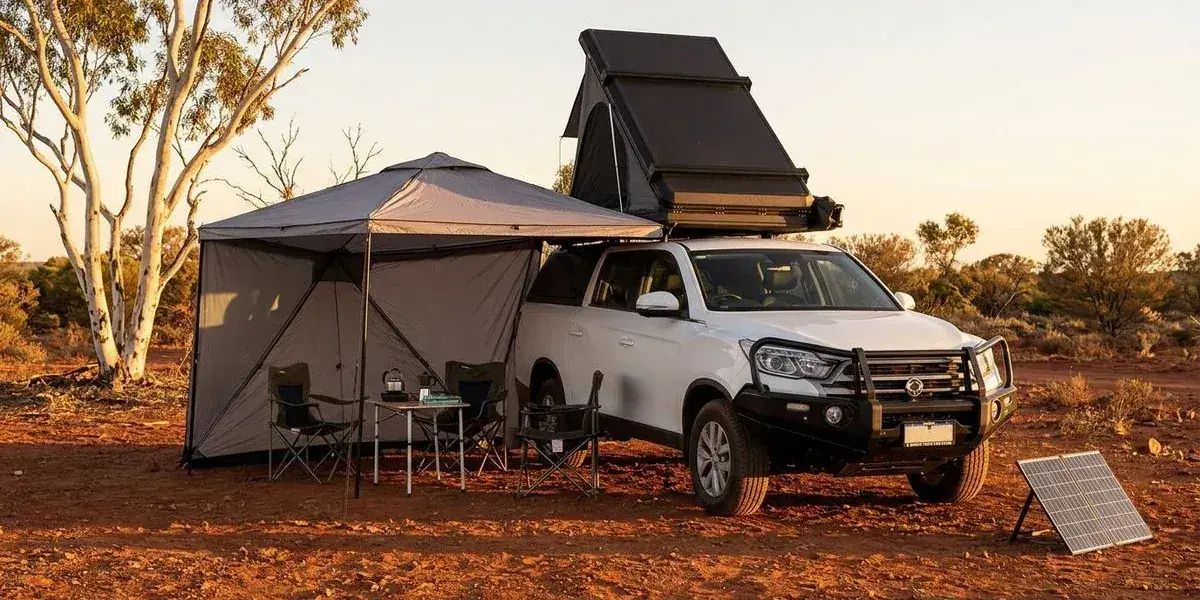
Our Wanderer is a near-new KGM dual-cab 4WD with a custom overlanding build, and every 4WD camper in Perth we hire is a dual-cab ute with a rooftop tent. At pickup, look over the tyres for even wear and cuts, and check that the spare is the same size as the tyres on the ground. Make sure you know where the jack and wheel brace are before you leave the depot, not at the side of a road.
2. What Is Included in the Hire
A bare 4WD and a fully kitted camper are very different hires. Tourism Australia notes that cooking gear is often provided but that bedding, chairs, GPS and child seats may cost extra. Read the gear list and the extras list on every listing you compare, and ask:
- Is the fridge a compressor fridge running off a proper battery system, or a cool box?
- How big is the battery, and does solar charge it while you are parked?
- How much water does the vehicle carry, and is there a shower?
- What is priced separately?
Here is what our service pages list for each build:
| Vehicle | Power and fridge | Tent and camp |
|---|---|---|
| OFFGRID Wanderer | 300Ah lithium battery with solar charging, 85L upright fridge/freezer | Premium rooftop tent, 270-degree awning |
| OFFGRID Wanderer 2.0 | 300Ah lithium, 200W solar, 3000W inverter, 85L upright fridge with freezer compartment | Large rooftop tent with queen inflatable mattress, 270-degree awning |
| Bakkie and Bakkie 2.0 | High-capacity lithium battery with solar charging | Premium rooftop tent, overlanding kitchen and storage system |
Water differs too. The Wanderer has a 22L portable shower, and the Wanderer 2.0 has a 100L integrated water tank with a camp shower. The Wanderer 2.0 also includes a WA national park pass and an integrated Starlink unit, with the data plan extra. Bakkie 2.0 is the newer, refined build of the Bakkie, with a redesigned storage layout and an enhanced electrical system.
3. How Kilometres Are Counted
Ask three things. Is the allowance a daily cap or averaged across the trip? What is the rate for extra kilometres? Can you check the total before you book?
On our hires, every vehicle includes 200 km a day, averaged across the whole trip. A 10-day hire gives you 2,000 km to use however you like. Kilometres over the total cost $0.50 to $0.60 each.
Try the sum on a real route. Say your plan adds up to 2,400 km over 10 days. That is 400 km over, which costs $200 to $240. Map the whole route in a mapping app, add your side trips, and compare the total with the allowance before you pay. If you are well over, trim the route or put the excess in your budget.
Hires also start and finish in the same place. Our vehicles are picked up and returned in Perth, and we do not offer one-way hires, so plan a loop.
4. Insurance and Excess: Read the Exclusions
Do not stop at “fully insured”. Ask what your excess is, whether you can lower it before pickup, and what the cover excludes. On Camplify, the accident excess reduction is mandatory, and there are two packages. Risk Taker is the default, with an excess between $0 and $5,500 per incident depending on the RV and the holiday. Happy Camper lists an excess between $500 and $0 per event. You can upgrade any time before the hire starts, and not after.
The exclusions matter more than the headline number. In Camplify’s accident excess reduction terms:
- Risk Taker does not apply to damage to tyres, windscreens, awnings and annexes.
- Neither package applies if you are breaking the owner’s rules in the listing, such as a prohibited use.
- Neither package applies to damage on a hire outside the Camplify platform, including extra days not recorded in a booking.
- The excess reduction does not lower the Young Driver Excess for hirers and authorised drivers under 25. Our minimum hirer age is 24.
Camplify also says personal belongings are typically not covered by the vehicle’s cover, so take travel insurance for your own gear. There is no cash bond on our campers, and insurance, excess and roadside assistance run through Camplify under Camplify’s standard rules. Camplify explains the options on its accident excess page. For a longer explanation of how the cover works, read our guide to camper hire insurance in Australia.
5. Where You Can and Cannot Drive
Ask for the list of prohibited roads and surfaces, and ask how route approval works, before you book. Tourism Australia gives the same advice: many hire companies do not allow dirt roads, so check the contract first.
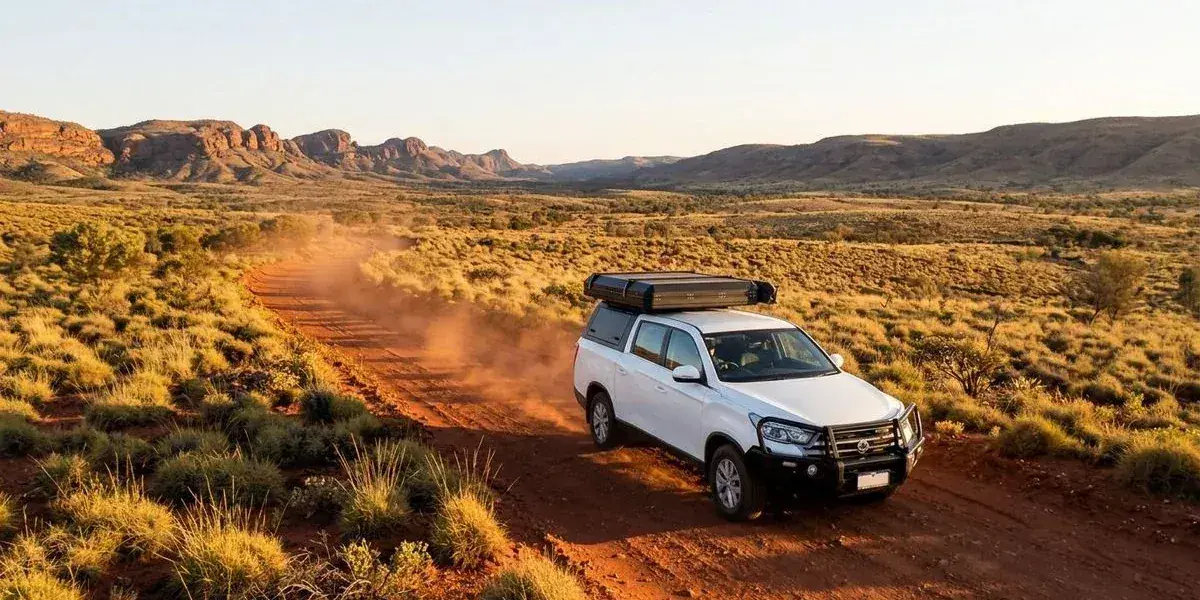
Our hire vehicles are for sealed roads and approved unsealed roads, with pre-approval. Unsealed roads need approval before your trip, and we advise which ones are suitable based on current conditions and your route. The Camplify listing sets a maximum of 60 km/h on gravel roads. Heavy four-wheel driving, river crossings, corrugated tracks and routes such as the Gibb River Road and Canning Stock Route are not permitted. Unauthorised off-road driving incurs a $150 undercarriage inspection fee.
Beach driving is not permitted except at Lucky Bay and Wharton Beach near Esperance, where the sand is firm.
Wildlife is the other road risk. Main Roads WA tells drivers to watch for animals, especially at dusk and dawn, when they are most active. In regional areas, aim to be at camp before dusk.
6. Fuel, Cleaning and Return Rules
Fuel and cleaning are the two return rules that turn into charges. On the Wanderer listing, the rules are diesel only, no high-flow pumps, a full tank at handover and a full tank on return. The listing also says to clean the entire vehicle before returning it, including the equipment and the 4WD interior, and not to use power washers.
Our FAQ sets the charges: $100 to $150 if the vehicle comes back uncleaned, and $250 for red dust contamination. If you would rather not clean it yourself, our post-trip cleaning service is $100 to $150.
You collect from our Cloverdale depot, about 5 minutes from Perth Airport. Collection and return are at the depot only. The minimum hirer age is 24, and you need a valid full driver’s licence.
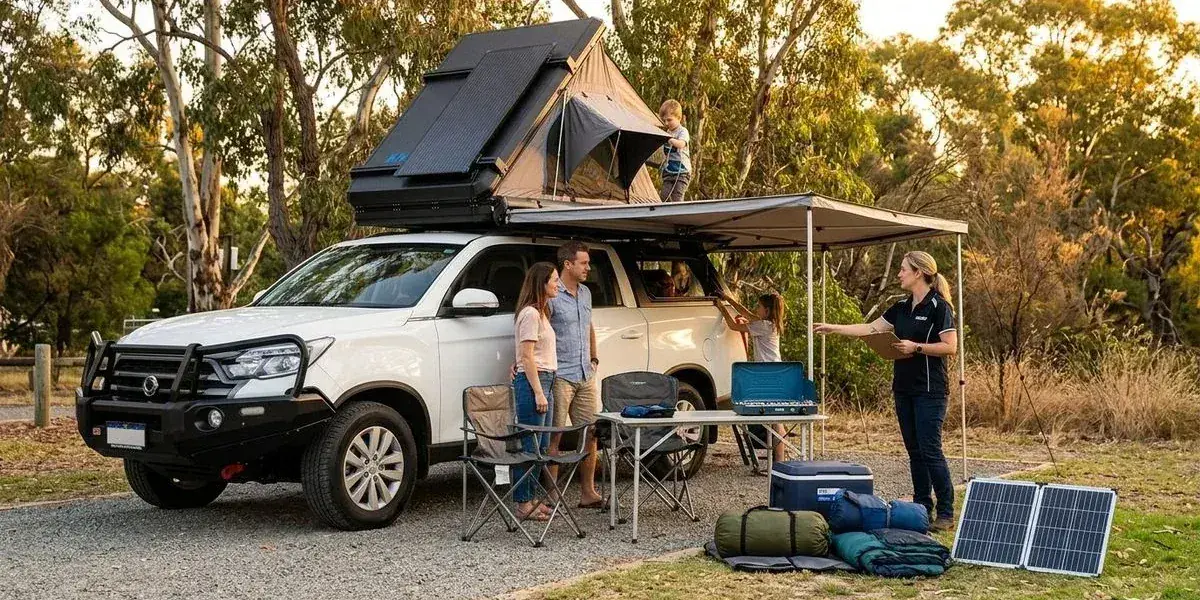
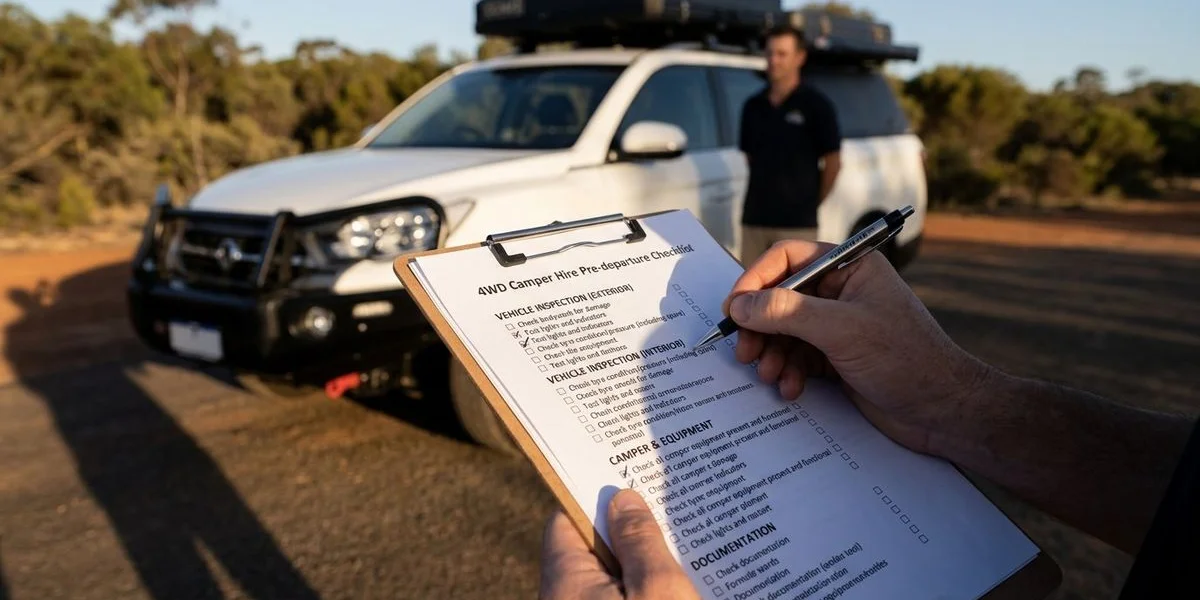
A proper pickup protects both sides. We take you through a full vehicle walkthrough and equipment training before you leave. Tourism Australia suggests photographing the vehicle and noting existing damage on your paperwork, and a slow phone video of the walk-around does the same job. At return, tell the owner about any damage straight away. The listing asks for who, what, where and when.
7. Cancellation and Payment Terms
Cancellation terms are the part most people read last. On 18 November 2026, the Wanderer listing showed a strict policy:
- More than 45 days before the start: a full credit.
- 45 to 20 days before the start: a 90 per cent credit, and booking fees are not credited.
- Fewer than 20 days before the start: no credit or refund.
The listing also notes that refunds are available on request, less admin fees. Read the policy on the listing you book, and ask your travel insurer whether it covers a cancelled hire.
You book through Camplify, and there is no cash bond on our campers.
8. Support When Something Goes Wrong
Ask who you call, and whether they answer at night. All our hires include 24/7 roadside assistance through Camplify. You can also message Dorian directly during your trip for route advice, equipment troubleshooting and help with the claims process.
Phone coverage can drop out away from the towns. Telstra describes its coverage maps as a guide, not a guarantee, so check your route on the map and download offline maps before you leave Perth. If you need a connection on the road, the Wanderer 2.0 has an integrated Starlink unit, and Starlink is available as an add-on with any vehicle hire.
If this is your first big trip, start with our overlanding for beginners guide.
Questions to Send Before You Pay
Copy these into an email to any operator and keep the answers:
- What is the model year, and when was the vehicle last serviced?
- What is on the gear list, and what is priced as an extra?
- Is the kilometre allowance daily or averaged, and what is the rate for extra kilometres?
- What is my excess, can I lower it before pickup, and what does the cover exclude?
- Which roads and surfaces are prohibited, and how do I get a route approved?
- What are the fuel, cleaning and return rules, and what are the charges?
- What is the cancellation policy at 45 days, 20 days and inside 20 days?
- Who do I call at night, and what do they arrange?
Frequently Asked Questions
What should I check before hiring a 4WD camper?
Check the vehicle’s age and service history, the gear list, how kilometres are counted, your excess and its exclusions, the road rules, the fuel and cleaning rules, the cancellation policy and the support number.
What is the minimum age to hire a 4WD camper?
Our minimum hirer age is 24, and you need a valid full driver’s licence. Camplify applies a Young Driver Excess to hirers and authorised drivers under 25, and the excess reduction does not lower it.
Can I take a hire 4WD camper on unsealed roads?
Only with pre-approval, and not on every road. Ask for the approved list for your route before you book, and keep to the 60 km/h gravel limit on the listing.
What does Camplify’s excess reduction not cover?
On the default Risk Taker package, damage to tyres, windscreens, awnings and annexes is excluded. Neither package applies if you break the listing rules, or to damage on days that are not recorded in a booking. Camplify says personal belongings are typically not covered either.
Can I get a refund if I cancel?
It depends on how far ahead you cancel. On our Wanderer listing, cancelling more than 45 days before the start earns a full credit, 45 to 20 days earns a 90 per cent credit with booking fees not credited, and inside 20 days there is no credit or refund. Check the policy on the listing you book.
How We Know This
The rules in this guide come from our Camplify listing, which we read on 18 November 2026, our FAQ and our service pages. Excess details come from Camplify’s help centre and terms. Written by Dorian Menard, who has 12+ years of experience living in Perth and testing road trip vehicle setups across Australia. Rules and fees change, so confirm them on the listing before you book.
Ready to Start Your Adventure?
Premium 4WD campers from $160/day. Depot pickup in Cloverdale, 5 minutes from Perth Airport.
Check Availability