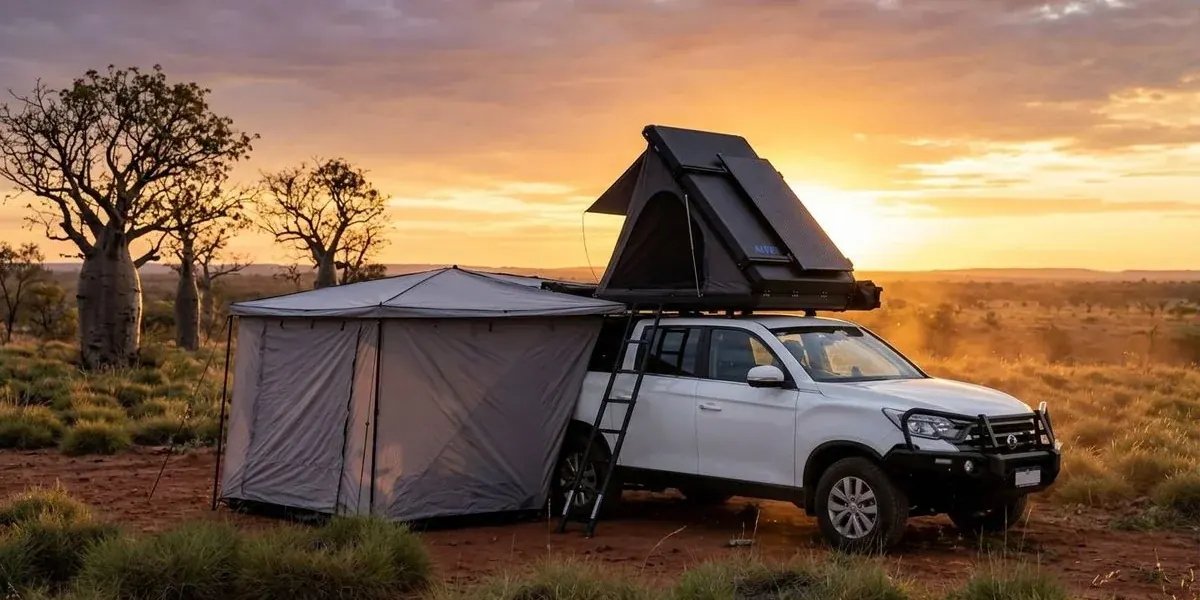
Rooftop Tent vs Ground Tent WA: Roof Top Tent Hire Perth
Rooftop tent vs ground tent for WA road trips: setup, comfort, weather and campsite ground, plus roof top tent hire in Perth with the Wanderer and Bakkie.

Dorian Menard
Founder & Owner
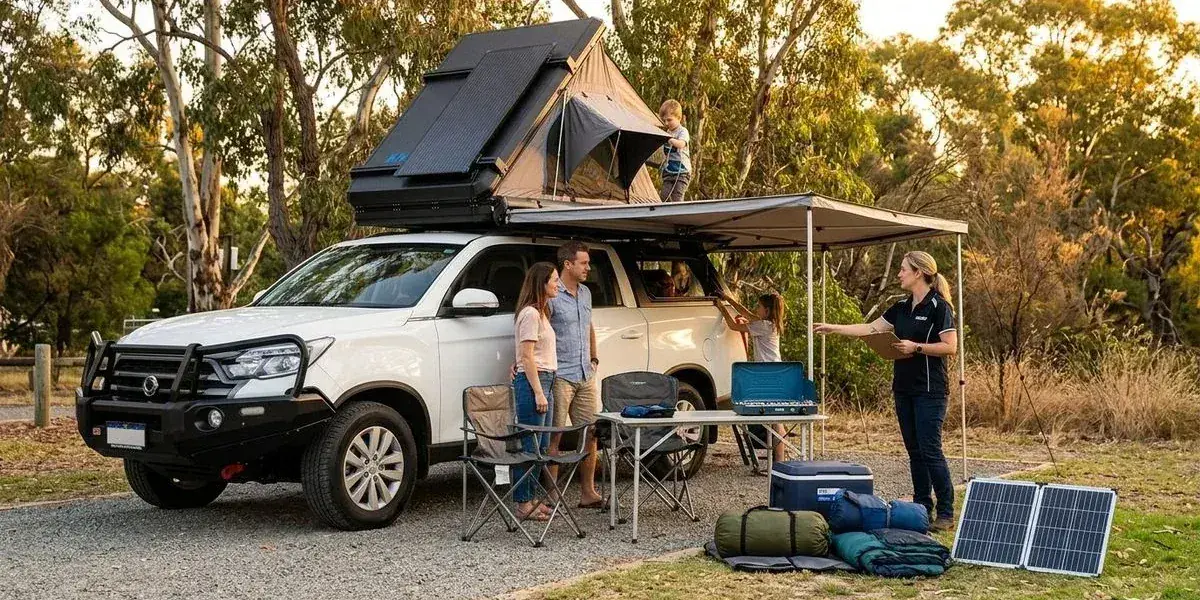
For most WA road trips where you move camp every day or two, a rooftop tent is the easier choice. It needs no pegs and keeps you off the ground, and our Wanderer pages put setup at 30 seconds or less on the Wanderer and under two minutes on the Wanderer 2.0. A ground tent wins if you base camp, walk in to a camp, or need to sleep more than two. If you want to try a roof top tent before you buy one, we hire dual-cab 4WD campers with one fitted, collected from our Cloverdale depot.
This guide compares the two for WA conditions. The ground and weather facts come from DBCA campsite pages, and the tent details come from our own vehicle pages.
| Feature | Rooftop tent | Ground tent |
|---|---|---|
| Setup | Wanderer: 30 seconds or less. Wanderer 2.0: under two minutes | Find a flat spot, pitch the poles, peg it, inflate the mattress |
| Pegs | Not needed, the tent sits on the vehicle | Needed |
| Sleeps | Two adults on the Wanderer and Wanderer 2.0 | As many as the tent allows |
| Leaving camp for the day | Fold it down first | Drive off |
| Walk-in camps | Stays with the vehicle | Goes with you |
Rooftop Tent vs Ground Tent: Setup Time and Convenience
The biggest difference is what happens when you arrive. DBCA’s Kalbarri National Park guide puts the park 590 km north of Perth, and after a day on the road the last job you want is a nightly pitch.
Our OFFGRID Wanderer page says its rooftop tent sets up in 30 seconds or less. The Wanderer 2.0 page says deployment takes under two minutes. On both, the mattress stays in the tent.
The Reality of Ground Tent Setup
A ground tent is a longer job, and it eats into the part of the evening you came for.
- Site selection: Find a flat, clear patch of ground.
- Clearing: Move the sharp rocks, sticks and bindis.
- Assembly: Thread the poles, hammer the pegs and attach the guy ropes.
- Internal setup: Inflate the mattresses and unroll the sleeping bags.
None of that is a big deal once. Doing it every night is what a South West or Coral Coast itinerary asks of you.
Comfort and Sleep Quality
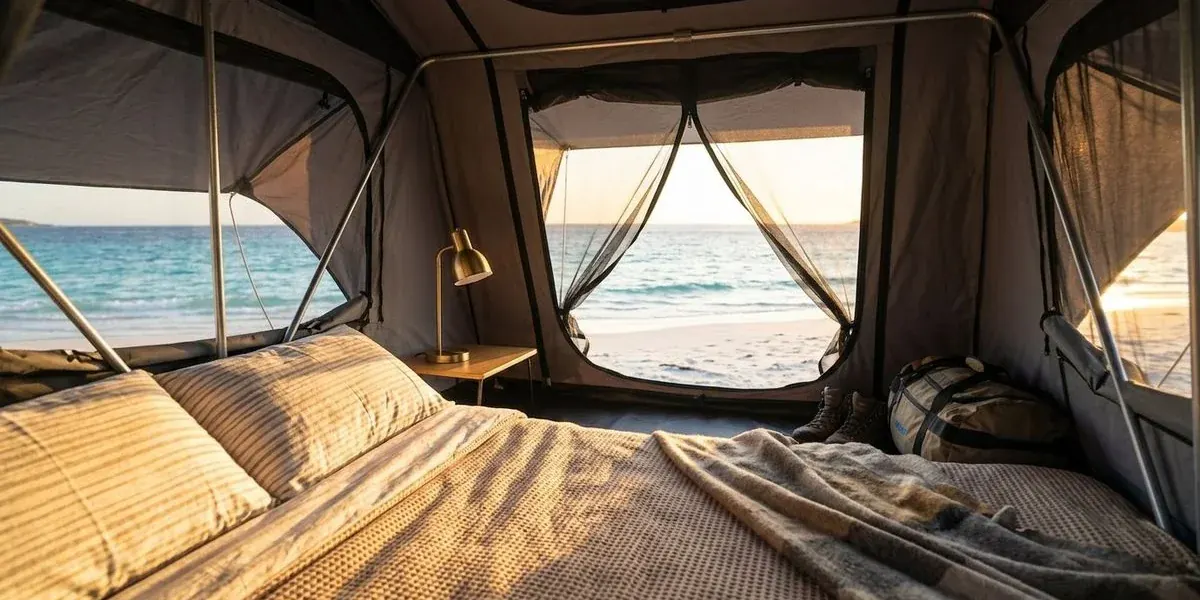
A rooftop tent puts you on a mattress on a flat platform. Our Wanderer page lists a 15cm upgraded mattress, and our Wanderer 2.0 page lists a queen-sized inflatable mattress. With a ground tent you bring your own mat or swag and sleep on whatever the site gives you. DBCA lists the sites at Warren, Canebrake Pool and Workmans Pool as compacted earth, which gives little cushion under a thin mat.
Heat and Cold
The season matters more than the tent type. DBCA warns that nights can be cold from June to September, and that December to April can be extremely hot with a very high bushfire risk. The Kalbarri National Park guide says that when it is hot in town, temperatures in the park can reach up to 50°C.
Being off the ground helps airflow, and our Wanderer 2.0 page says the tent sits high enough to catch an evening breeze. It does not cool a hot night or warm a cold one by itself. Pack for the season, because the bedding and clothes you need in July are not the ones you need in January.
Weather Protection
DBCA says storms are common from May to October. A rooftop tent is fixed to the vehicle, so there are no pegs to pull out in a gust and no groundsheet sitting in runoff. A well-made ground tent can handle bad weather too, but the pitching is the work, and you do it in the weather you are trying to avoid.
Ground Conditions at WA Campsites
Campsite ground varies a lot, and it decides how hard a ground tent is to pitch. DBCA describes the sites at Warren, Canebrake Pool and Workmans Pool as compacted earth. It describes the five sites at Goulet Bluff as shallow sand over smooth rock. Neither is easy ground for pegs. The Canebrake Pool page also warns that some campsites are subject to standing water after heavy rain.
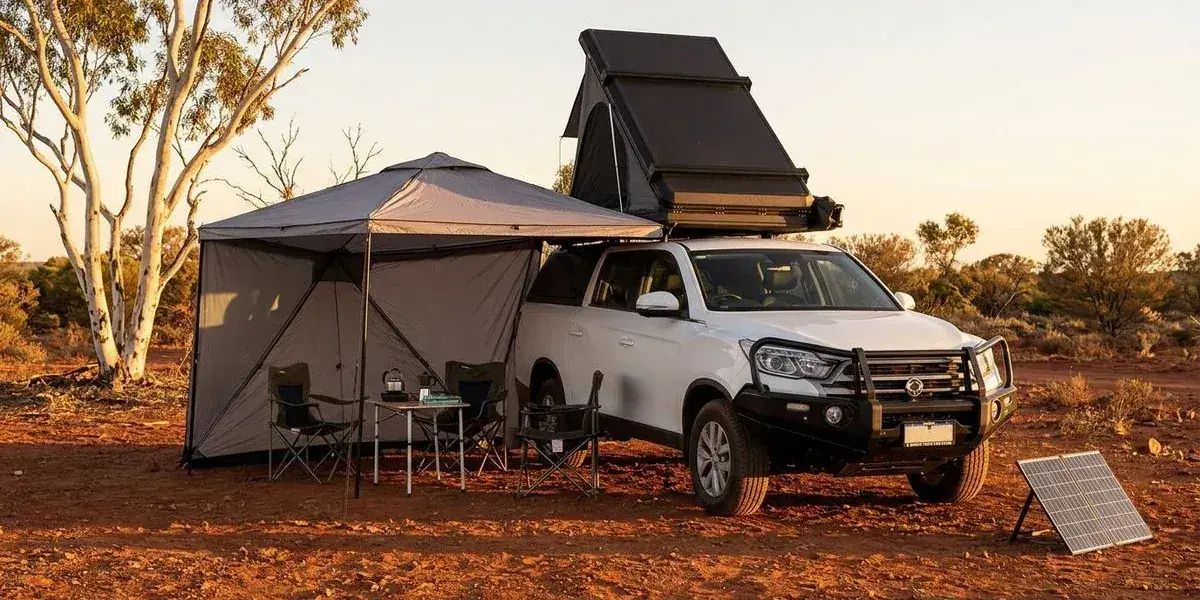
A rooftop tent sits on the vehicle, so the ground matters less. You still need a reasonably level place to park, and being up off the ground keeps your bed above any surface water and out of the way of ground-level insects.
Some of these camps are reached by unsealed roads. Our hire vehicles use unsealed roads only with our pre-approval, so check with us before you book a camp that needs one.
When a Ground Tent Is the Better Call
A rooftop tent does not win every time. There are three situations where a ground tent is the better choice.
1. Base Camping
If you are parked in one place for a week, a ground tent lets you drive off for the day without packing up camp. A rooftop tent ties the vehicle to the site until you fold it down.
2. Walk-In Camps
A ground tent goes where the vehicle cannot. The rooftop tent stays with the vehicle, so a packable ground tent is your only option for a walk-in camp.
3. Larger Groups
The Wanderer and Wanderer 2.0 rooftop tents are described on our pages as sleeping two adults, while the vehicles seat five. A family of four or five will usually need a ground tent or swag alongside to fit everyone in. For bigger groups the two setups work together rather than compete.
Roof Top Tent Camper Hire in Perth
Our 4WD camper hire in Perth fleet is four dual-cab 4WD camper builds, and every one has a rooftop tent fitted. Here is what each page says about the tent.
| Vehicle | Roof top tent | From |
|---|---|---|
| OFFGRID Wanderer | Premium rooftop tent, sleeps two adults, 15cm upgraded mattress, set up in 30 seconds or less | $160/day |
| OFFGRID Wanderer 2.0 | Large rooftop tent, fits two adults, queen-sized inflatable mattress, deploys in under two minutes | $160/day |
| Bakkie and Bakkie 2.0 | Premium rooftop tent with bedding and linens | $200/day |
The Bakkie and Bakkie 2.0 sit in the same class at the same price. Check the Camplify listing for the Bakkie’s sleeping capacity. Prices are “from” figures and seasonal pricing applies, so the live Camplify listing is the price to trust.
How hiring works:
- Collection: from our Cloverdale depot. All hires start and finish in Perth, and we do not offer one-way hires.
- Booking: through Camplify, with accidental damage cover included and no cash bond.
- Distance: 200 km a day is included, averaged across your trip.
- Minimum hire: varies by season and vehicle.
- Hirers: must be 24 or older and hold a full driver’s licence.
- Where you can go: the South West and up the Coral Coast as far as Shark Bay and Kalbarri.
- Roads: sealed roads and approved unsealed roads, with our pre-approval. Heavy four-wheel driving, river crossings and corrugated tracks are not permitted. Beach driving is not permitted except Lucky Bay and Wharton Beach in Esperance.
Which Is Better for a WA Road Trip?
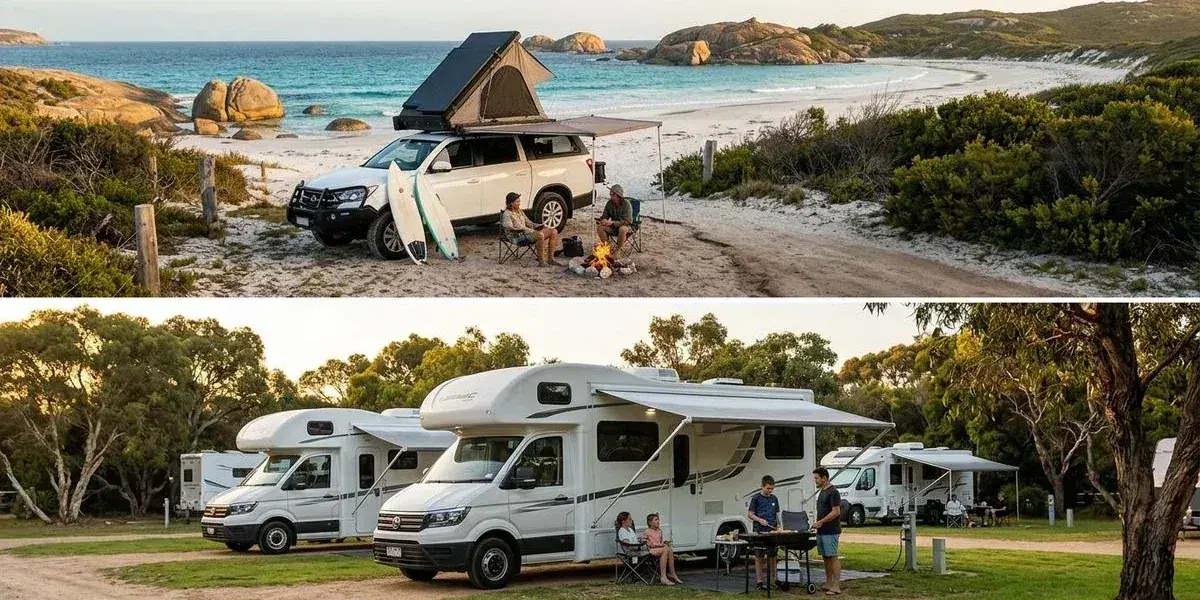
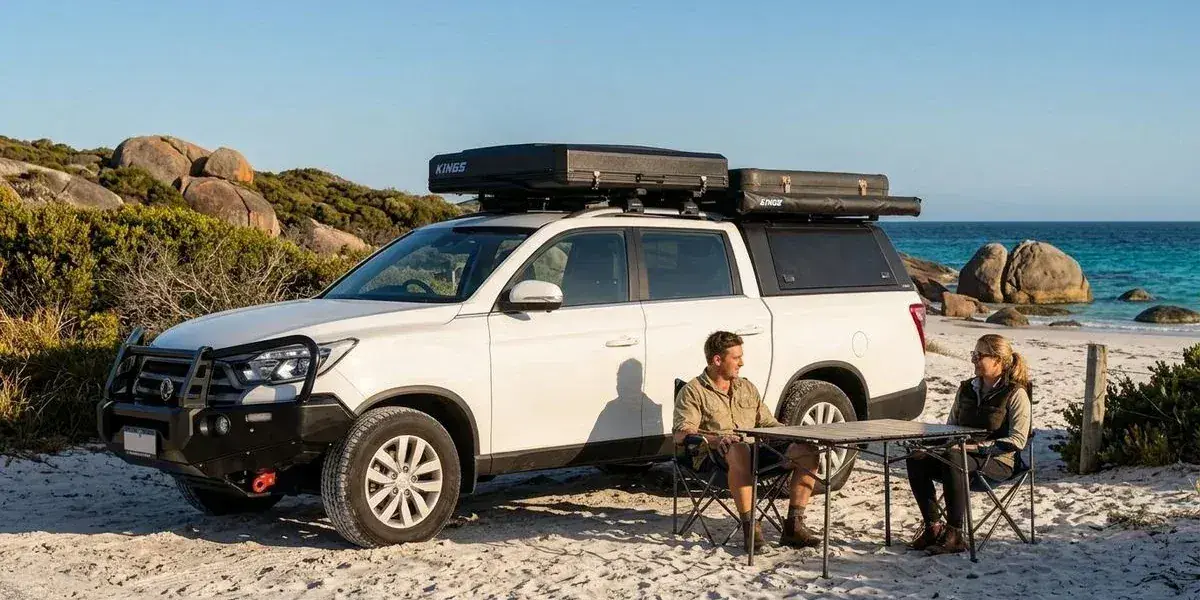
For a trip that moves every day or two, the rooftop tent is the easier choice. Think of the South West loop through Margaret River, Pemberton, Walpole and Albany, Perth to Esperance, or the Coral Coast up to Kalbarri and Shark Bay. Fast setup, a proper mattress and a bed off the ground suit that kind of travel.
Ground tents still earn their place for walkers, base campers, large groups and travellers who already own good camping gear and do not mind the nightly pitch.
If this is your first trip of this kind, our beginner’s guide to overlanding in Australia covers the basics before you choose.
What Catches People Out
- Assuming the tent suits every campsite. DBCA’s Workmans Pool page says most sites suit tents and swags only, and that some sites have steps between the tent and the parking spaces. Read the site description before you book.
- Forgetting the fold-down. Every trip into town means packing the tent away first. Plan one base day and one town day rather than three small trips.
- Packing for the wrong season. Cold nights, storms and extreme heat all come with DBCA warnings at different times of year, so match your bedding and clothes to the month.
- Taking an unapproved unsealed road. Unauthorised off-road driving incurs a $150 undercarriage inspection fee, so ask us about a road before you drive it.
Roof Top Tent and Ground Tent Questions
Is a rooftop tent better than a ground tent for WA?
For a trip that moves camp every day or two, yes. It is faster to set up, needs no pegs and keeps you off the ground. A ground tent is better for base camping, walk-in camps and groups of more than two.
Can I hire a ute with a roof top tent in Perth?
Yes. We hire four dual-cab 4WD camper builds, each with a rooftop tent: the OFFGRID Wanderer and Wanderer 2.0 from $160/day, and the Bakkie and Bakkie 2.0 from $200/day. Collection is from our Cloverdale depot and booking is through Camplify, with no cash bond. Check Camplify for live prices and availability.
How long does a rooftop tent take to set up?
Our Wanderer page says 30 seconds or less, and our Wanderer 2.0 page says under two minutes. We run through the vehicle with you at handover.
How many people does a rooftop tent sleep?
On the Wanderer and Wanderer 2.0 it sleeps two adults, although the vehicles seat five. For the Bakkie, check the Camplify listing for sleeping capacity. A bigger group needs a ground tent or swag alongside.
Is a rooftop tent comfortable in winter and summer?
It depends more on the season than the tent. DBCA warns of cold nights from June to September and extreme heat from December to April. Pack for the month, and see our packing list for what to wear to sleep in a rooftop tent in winter.
How We Put This Together
The tent details come from our vehicle pages, and the hire rules from our FAQs. The campsite ground and weather facts are DBCA’s, linked beside each one. Dorian Menard, who founded the business, has lived in Perth for more than 12 years and has tested road trip vehicle setups across Australia. This guide does not rate tent brands or models, because we have no test results to share.
Ready to Start Your Adventure?
Premium 4WD campers from $160/day. Depot pickup in Cloverdale, 5 minutes from Perth Airport.
Check Availability